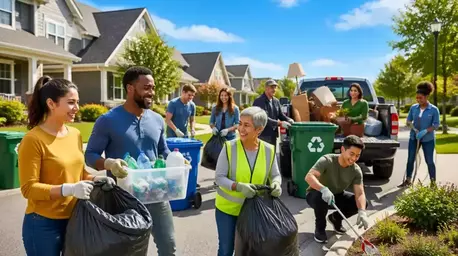

Encouraging Community Decluttering Together
By Maya Kincaid / Oct 27
What if your clutter could transform not just your home, but your entire community? At TossNest, we believe that decluttering is more than just organizing; it’s about fostering a sense of community and environmental responsibility. Join us in exploring how collective efforts can lead to a cleaner, happier neighborhood.
Participating in community decluttering initiatives yields numerous benefits that enhance both personal and community well-being. For even more detailed guidance, consider how you can declutter your home with ease and contribute to these collective efforts. Below are key advantages highlighted visually.
A clean neighborhood fosters a sense of pride among residents.
Less clutter leads to reduced stress and anxiety for everyone.
Working alongside neighbors promotes teamwork and camaraderie.
Responsible disposal reduces waste and contributes to a healthier planet.
When we talk about decluttering, it’s not just about clearing out our personal spaces. It’s a movement that can transform our communities! At TossNest, I believe that when we come together to declutter, we create a ripple effect that benefits everyone. Imagine neighborhoods filled with open spaces and vibrant parks, where everyone feels a sense of pride in their environment.
Decluttering in your community means engaging with your neighbors and working together to tackle clutter not just in homes, but also in public spaces. It’s about recognizing that our surroundings affect our well-being, and when we take action, we’re showing care for our environment and ourselves. Every little effort counts and adds up to a cleaner, more inviting community.
Decluttering in the context of community involves collaboration, responsibility, and a shared vision for improvement. It’s about understanding that our personal belongings can impact others if we don’t manage them with intention. Here are some key aspects of community decluttering:
When I started TossNest, I noticed how much potential there was for positive change when neighbors came together. It’s not just about removing junk; it’s about fostering connections and building a community that values cleanliness and sustainability. You can learn more about efficient rubbish removal tips to further support these efforts.
So, why should we care about decluttering together? The benefits extend far beyond just the physical space we clear. Here are some advantages of participating in collective decluttering efforts:
As we declutter together, we not only create a cleaner space but also cultivate a sense of belonging. When families and small offices join hands in such initiatives, it becomes a celebration of community spirit. Through my work at TossNest, I’ve witnessed firsthand the joy that comes from seeing neighbors unite for a common purpose!
Here's a brief recap of the key points discussed so far:
Community decluttering involves collective efforts from residents and local organizations to clear out clutter from both personal spaces and public areas, fostering a cleaner, more organized neighborhood.
Key benefits include enhanced community pride, improved mental well-being for residents, strengthened relationships among neighbors, and a positive environmental impact through responsible disposal and recycling.
Impact can be measured by setting specific goals (e.g., participation rates, volume of items collected), using surveys for feedback, and showcasing results through before-and-after stories, visual displays, and community celebration events.
Common barriers include feelings of overwhelm, shame regarding personal clutter, and concerns about privacy. Addressing these by normalizing the process, offering guidance, and ensuring respect can increase participation.
Peer support groups foster camaraderie, encourage accountability, and provide a platform for individuals to share experiences, tips, and challenges, making the decluttering journey less daunting and more motivating.
After organizing a decluttering initiative in your community, it’s essential to measure its impact. This not only helps in understanding the effectiveness of your efforts but also motivates others to participate in future events. At TossNest, I've found that tracking progress and celebrating achievements can create a positive ripple effect, encouraging more people to join our mission of fostering cleaner, more organized spaces!
One effective way to assess impact is by setting specific goals from the onset of your decluttering campaign. These can include participation rates, the volume of items collected, or the number of families engaged. By defining clear objectives, you can create a roadmap that keeps everyone focused and aligned. It’s gratifying to see how far we’ve come when we can point to specific metrics showing our community’s dedication to decluttering!
Setting achievable goals is a key step in measuring the success of your decluttering efforts. Think about what you’d like to accomplish and how you’ll track these achievements. Here are some helpful strategies:
By establishing these goals, you can create a sense of shared accomplishment. It helps everyone involved feel a part of something bigger than themselves, and that’s what community is all about!
Sharing the success stories from your decluttering events can inspire others to join. A powerful way to do this is by using before-and-after photos that highlight the transformation in your community. These visuals can be incredibly motivating! They not only capture the effort but also tell the story of how much cleaner and more inviting our community spaces can become.
Additionally, positive feedback from participants can serve as powerful testimonials. Here are a few ideas to showcase results:
When we celebrate our wins together, it fuels a passion for continued community involvement. At TossNest, we often hear stories from participants about how our efforts not only helped their spaces but also strengthened connections among neighbors! For more inspiration, explore how to declutter community spaces effectively.
While the idea of decluttering can be exciting, some people may feel overwhelmed or hesitant to participate. It’s natural to encounter barriers along the way. As someone who cares deeply about community well-being, I’ve seen firsthand how addressing these concerns can make a significant difference in participation rates.
Understanding common worries is the first step in fostering an inclusive environment. Let’s look at some frequent barriers and how to address them effectively:
Many individuals may feel overwhelmed at the prospect of decluttering, especially if they associate it with negative emotions or memories. Here’s how to help ease those feelings:
When community members see that it’s okay to feel vulnerable, they may be more willing to participate and seek support from one another. This is where the beauty of community comes into play!
Creating a supportive environment is key to encouraging participation. Providing resources and assistance can help individuals feel more comfortable as they embark on their decluttering journey. Here are some ideas to consider:
By providing these resources, we empower individuals to take the first step toward decluttering. This support builds a sense of community, reminding everyone that they’re not alone in this process. You can also learn more about how donating items strengthens local communities.
Connecting individuals with similar goals can be a game changer! Building peer support groups fosters a sense of camaraderie and encourages accountability. When people know they have someone to lean on, they are more likely to take action.
Here’s how you can cultivate peer support:
By creating a supportive network, we all can feel empowered to make meaningful changes. That’s the power of community engagement at TossNest, where we aim for more than just decluttering; we strive to build connections!
Here is a quick recap of the important points discussed in the article:
By Maya Kincaid / Oct 27
By Maya Kincaid / Oct 17
By Maya Kincaid / Oct 12